Student & Alumni Stories
Student Stories
Hear what some of our current and former students have to say about our program.
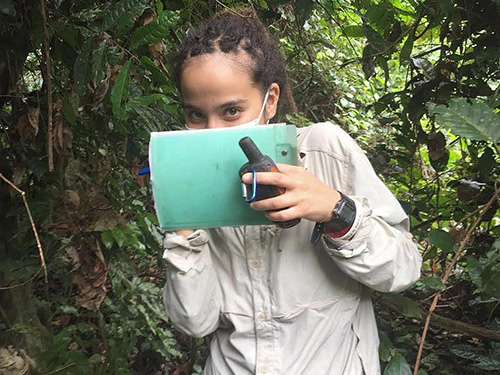 Dania Abizaid-Herrera
Looking into the eyes of a wild primate is something that sends chills down your spine, making you really question what makes us humans so different. Studying our closest living relatives is something that has fascinated me since childhood, and I have been privileged enough to be able to pursue it as a career via my studies here at SDSU. After graduating with my BSc in Biology, I had the chance to work as a research assistant with wild Bornean orangutans in Indonesia, and lowland gorillas in Gabon. These experiences not only introduced me to the world of primatology - they opened my eyes to understanding that primatology is much more than following monkeys and apes around the forest. Primatology provides a key to understanding ourselves. Studying nonhuman primates - from their highly complex social lives to their immense behavioral diversity - is enthralling, but what makes it particularly special from an anthropological perspective is how we can use this knowledge to help understand humans in both the past and the present. Through my anthropological training at SDSU, I aim to produce research that considers the human-nonhuman primate interface in support of the development of conservation strategies that ensure that the needs of both are met.
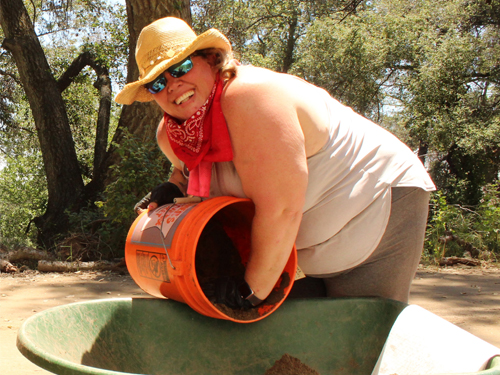
Jamie Bastide
As an undergraduate, I chose anthropology because of my interest in people and how they lived in the past; essentially, I really just wanted to dig up old stuff! As I have progressed through my academic career however, I have been able to understand so much more of the underlying causes behind the material culture that people leave behind. My passion has become understanding identities through historical documents and artifact assemblages to not only get to the center of what people use and why, but also the nuances of relationships and negotiations within society. I have been lucky enough to purse this interest through both public archaeology and within the greater archaeological community through conferences, presentations, and a museum exhibit. I plan on furthering my career through a doctoral program and look forward to sharing my love of archaeology and anthropology to future generations of students as a professor.
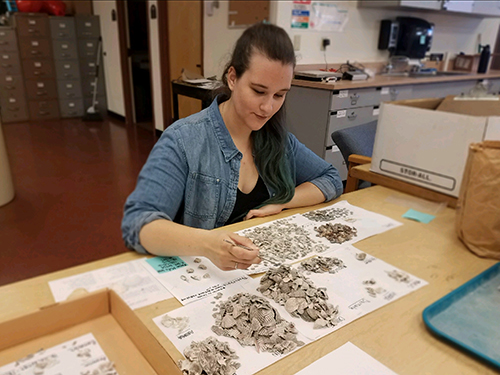
Megan Carey
Anthropology speaks to me because, at its core, it is about empathy and human connection. Take archaeology, for instance. I am often astounded by the age, magnitude, or importance of an archaeological site or artifact, but it is the fingerprint in the clay, the snarky comment on a page’s margin, or the notches on a door-frame that make me stop and think. These are not grand monuments or feats of human achievement; they are just human. These tiny details of life tie people together as individuals through time and space. Anthropology aids us in connecting with people from the past to the present, from the other side of the world to right next to you. This connection is imperative. We, and the world, are all the better when we can empathize with people who are unlike ourselves.
Shannon Farnsworth
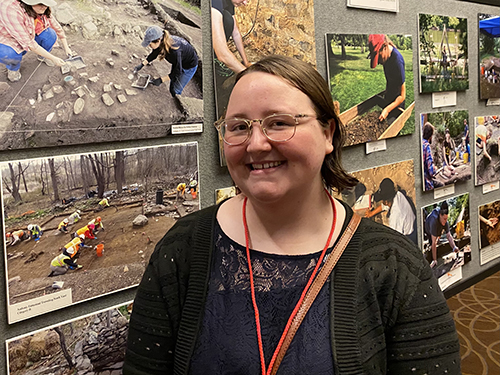
As an undergraduate at SDSU, I discovered my passion for historical archaeology. It allows me to feel a connection to individuals from the past – specifically those that are not typically recognized in other disciplines – through their material goods and primary source documents. It also benefits from using the four fields of anthropology, allowing for a well-rounded analysis. My work at the Nathan “Nate” Harrison Historical Archaeology Project, beginning in 2017, changed the course of my academic career and set-in motion my path to becoming a graduate student in anthropology. Not only did it allow me to dig at a site – a dream of mine since playing Tomb Raider as a kid – it led to my participation in various conferences, co-authoring a journal article, and helping plan and execute an exhibit at the San Diego History Center. In addition, throughout my years in the department, I have built my own community of friends and colleagues through classes, clubs, and work in multiple anthropology labs. I look forward to eventually using my background as an anthropologist as I begin my career and further education in the film industry.
Milan Joinson-Szekerka
I love to travel and to learn from the people in other cultures. A deep appreciation
for other perspectives was instilled in me from an early age because I went to a Waldorf
school from age 5 through to high school graduation. Even so, it wasn’t until I took
an anthropology class on magic, witchcraft, and religion that I saw anthropology as
a pathway that would feed my curiosity about and deepen my understanding of humankind.
The breadth of the anthropology curriculum at SDSU allows for a variety of career
paths: I intend to pursue a business of my own but believe that the warmth, empathy,
and true interest in humanity cultivated in SDSU’s anthropology program will serve
me well in any career I may later choose.
Desseray Reyes
I first learned about anthropology in a presentation Dr. Perez gave about migration.
Being a transborder student, this sparked my interest and I have been hooked ever
since! Completing cultural anthropology coursework and participating in an ethnographic
field school in Oaxaca, Mexico, I learned the importance of community-centered research
and I came to grasp just how vast migration and the aftermath it leaves behind is.
What I love most about anthropology is the way it highlights how important human connections
are. The connections that you make with the individuals that you work with give you
a better understanding of culture, and help emphasize how culture has shaped us all.
Robert Sanchez
Anthropology is a great major because of the tools it provides us as we approach sensitive issues, including gender, race, and many more hot topics—not just out in ‘the field,’ but also in our everyday life. Anthropology found me through my work photographing the local jazz music scene. The stories I heard opened my eyes to to the value of an ethnographic approach to this cultural arena. My understanding of culture, and the different forces that help form it, has really grown here at SDSU, in large part through the variety of classes offered, conversations with professors, and in-class debates seen through the lens of anthropology. Graduate school is my next goal in anthropology; to further expand my understanding of the culture here in the US and around the world.
Alumni Stories
Find out the latest from our alumni.

Douglas La Rose
Douglas La Rose completed our M.A. program in 2011 and has forged a rewarding career as international development and humanitarian aid project development specialist. In his master's thesis research he explored agricultural responses to environmental change in the forest-savannah transition zone of eastern Ghana. He looked at the ways farming communities understand and respond to environmental change, examining the interplay between different types of knowledge: Indigenous, global (knowledge promoted by organizations such as the UN), and hybrid. He has moved between project management and project design roles, bringing experience from programming, coordination, and stakeholder engagement across dozens of countries in Africa (Benin, Burkina Faso, Ghana, Ethiopia, Kenya, Madagascar, Malawi, Mali, Mozambique, Niger, South Sudan, Sudan, Togo, and Zimbabwe) and Latin America (El Salvador, Guatemala, and Honduras) to the design of people-centered projects that are inclusively designed for sustainable impacts.
Amanda L. Ellwanger
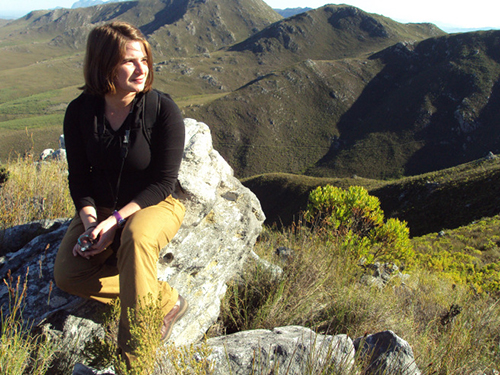
Amanda Ellwanger is currently a Lecturer of Anthropology at Georgia State University, Perimeter College where she teaches a variety of introductory courses. Her research uses an ethnoprimatological perspective to integrate the behavioral ecology of non-human primates with the sociocultural dimensions of wildlife. As an M.A. student at SDSU, she worked with Dr. Erin P. Riley. For her M.A. research, Dr. Ellwanger used ethnographic interviews and geospatial analysis to examine overlapping resource use between people and the Guizhou snub nosed monkey (Rhinopithecus brelichi) in Fanjingshan National Nature Reserve, China. After completing her M.A. degree, she began working on a doctoral degree at University of Texas at San Antonio. Her research, which was funded by the National Science Foundation, examined how human activity and attitudes shape foraging and sociality in chacma baboons (Papio ursinus) in Western Cape, South Africa. She successfully completed her Ph.D. in the spring of 2020. Dr. Ellwanger’s research approach uses an integrative methodological toolkit including animal ethology, ethnography, ecological sampling, and geospatial analysis to examine the intersection of evolutionary, ecological, and cultural relationships between people, animals, and their environments. In addition to exploring theoretical aspects of human-animal relationships, she is interested in using her research to mitigate conflict and promote coexistence between people and wildlife. Anthropologists can play a critical role by working with local communities to gain an embedded understanding of how the local context is shaped by broader social, historical, ecological, political, and economic factors, and then that knowledge can be used to facilitate locally relevant, community driven solutions to problems.
MarkJason Cabudol
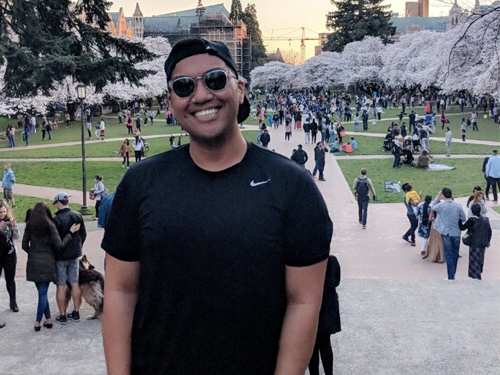
MarkJason Cabudol received training in qualitative research as a research assistant under the guidance of Dr. Elisa (EJ) Sobo in the Department of Anthropology and Dr. Tracy L. Finlayson in the School of Public Health on their respective studies throughout his senior year at SDSU. He prepared, presented, and won research awards per study towards the end of his senior year. He earned his BA in sociocultural anthropology in 2016 and continued working with diverse public health professionals and scholars at the University of California Los Angeles’s School of Dentistry. MarkJason continued to excel in research by delivering collaborative research findings at national and international research conferences and published with several public health research groups in peer-reviewed journals, including publishing as a first-author. In 2017, MarkJason accepted a research position at the University of Washington’s School of Medicine to further explore his research interests and gain a deeper understanding of the scientific process. His involvement on various clinical research studies provided him invaluable opportunities in collaboratively working in interprofessional teams to discover, design, and deliver high-quality medical innovations towards addressing health disparities and improving clinical outcomes among vulnerable populations. These team-based approaches to identifying the sociocultural, political, and economical factors affecting the health of medically underserved populations illuminated his desire and dedication to helping others as a healthcare provider. MarkJason is currently pursuing his doctorate in nursing practice (DNP) with a focus on adult-gerontology primary care. He looks forward to delivering compassionate and holistic patient-centered care to the most vulnerable populations in medically underserved communities as a doctorally prepared nurse practitioner.
Alec Griffin
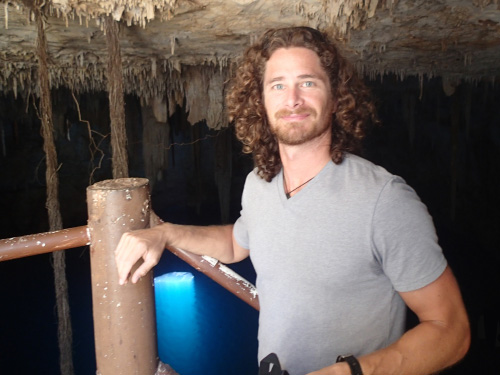
Alec Griffin graduated from SDSU with a BA in Anthropology in 2001 and worked for a short time as an archaeologists for a CRM firm in San Jose. He then went on to teach every grade level form K-12th grade while obtaining an MA in Anthropology from CSUEB, an MPP from CSUMB, and a multiple subject teaching certificate. In 2011, Alec moved to South Korea to teach high school social sciences for three years at an Seoul International School. He then headed back to California to start a nonprofit organization (World Progress Now) centered on Responsible tourism. In 2016 he found his ultimate calling of teaching at the community college level. Alec is currently working for Cerro Coso Community College as a full time faculty member teaching Anthropology and Sociology. With this current role, he teaches anthropology and sociology courses face to face inside two different state prisons, on-site college campus, and online. Alec credits anthropology with providing a living breathing operating philosophy and life pathway. His motto in life is to adapt and overcome, which is at the heart of anthropological fieldwork as well as life in general. Alec is an avid Aztec fan and has never forgotten the vital education and experience that SDSU provided him.
Kevin Hovey
I graduated from SDSU in 1991 with a BS in Physics and a BA in Anthropology. Soon afterwards, I was lucky enough to secure an archaeological position with the Cultural Studies Program at Yosemite National Park. I was able to conduct archaeological surveys and excavations during the day and rock climb to my heart’s content in the evenings and on weekends. Wanting to pursue my education further, I attended UC Riverside for a Masters in Maya Archaeology in 1995. Fate took over here when I learned that the California Department of Transportation (Caltrans) had several vacancies statewide for an archaeologist. I started my Caltrans career in Fresno and two years later transferred to San Diego, where I have worked ever since.
I am the Branch Chief of our District 11 Cultural Studies Office. I oversee and guide the work of archaeologists, architectural historians, and consultants. It’s our responsibility to help engineers maintain, improve, and expand our vital transportation network while at the same time ensuring Caltrans complies with Federal and State cultural resource regulations; most notably Section 106 of the National Historic Preservation Act of 1966 and California Public Resources Code 5024 but also the National Environmental Policy Act. For the latter, I coordinate with mayors, public works directors, engineers, politicians, environmental planners, lawyers, regulatory and resource agency staff, and consultant design engineers. I also oversee paleontology efforts on projects that impact the numerous fossil beds in San Diego and Imperial Counties in consultation with PaleoServices Department of the San Diego Natural History Museum.
I am always open to discussing careers with Caltrans, email me at [email protected] and I’ll respond promptly.
Jose Huizar
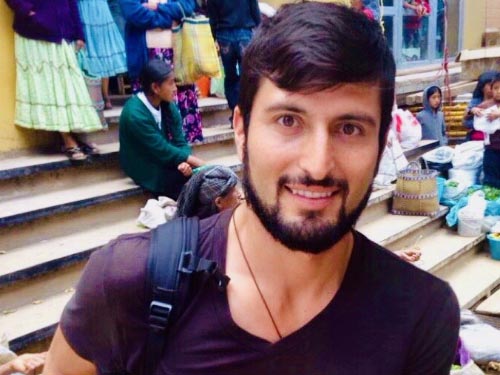
Jose Huizar earned his MA in 2015. He completed his thesis work in a rural community in Oaxaca, Mexico, where he worked alongside a community support group for elders who were left behind by migrant family members. In addition to his thesis work, he was part of a U.S.-Mexico graduate student research team that examined the process of deportation at shelters in Tijuana, Baja California. Jose also volunteered at a children’s after-school mentoring program in Oaxaca, Mexico, and at a center for unaccompanied immigrant children in San Diego, California. Jose continues to apply the anthropological training and education he received at SDSU in his career. Since leaving SDSU, Jose has continued working in his local community through an organization called Child Advocates of Placer County, which serves at-risk kids and families. As a Program Manager, he oversees the Youth Mentor, CASA, and K9s 4 Kids Programs, ensures the development and expansion of those programs, and collaborates with community partners. Jose is also responsible for the strategic planning and execution of services for those served by the programs.
Sam Kobari
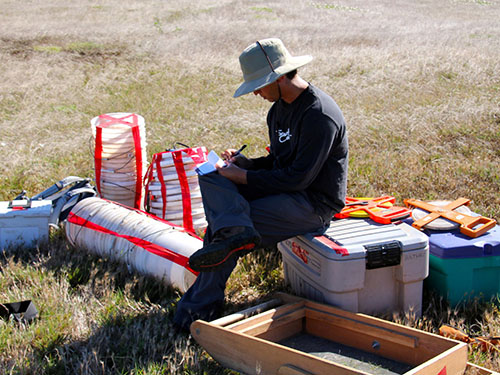
Almost every student who has passed through our department recently has taken a class from Sam Kobari, who has more students every semester in ANTH 101 than most faculty members have in five years. One reason students flow toward Kobari is that he knows better than most instructors where students are coming from: Mr. Kobari was a student at SDSU himself! He earned his MA in anthropology in 2012, after having completed a bioarchaeological analysis of Chumash burial findings from 1500 BP to 1800 BP. His bioarchaeological research continues, but Kobari’s true professional calling is teaching. No job has ever been more fulfilling and joyful to him. He loves the connections he builds with his students and the fact that he gets to talk about what it is to be human throughout the school year. When not in the classroom, Kobari can be found surfing the beaches of San Diego, rock climbing, and camping. Completing an MA in anthropology has provided Mr. Kobari with the opportunity to do what he loves both in the classroom and beyond.
Lew Parlette
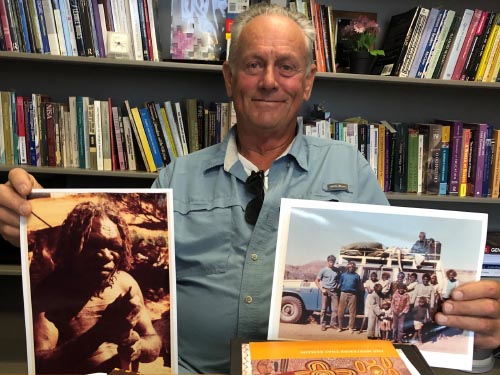
My interest in other cultures led me into anthropology. In class, 16mm ethnographic films depicting !Kung (San) people from the Kalahari, the Dani of New Guinea, and other foreign cultures fascinated me. I wanted to make movies like those myself. To that end, I took several cinematography classes at SDSU, encouraged by Dr. Paul Ezell, then the Anthropology Department's chair.
In 1971 I went to Australia in pursuit of a Masters degree, hoping to work with and film Aboriginal people living on Central Australian Settlements. I landed a job as research officer for the Australian Institute of Aboriginal Studies and spent most of 1972 filming and collecting artifacts for museums and the Institute. I met and learned from Walbiri and Pintupi tribal members who graciously accommodated my wishes. I realized how rare this opportunity was and in 1976 I fulfilled requirements for a Masters via a 16mm film of sacred ceremonies ("Dingari Ceremonies at Papunya") and a written thesis.
The celebrated Pintupi dot-art painting movement began during my stint and recently several Australian anthropologists have requested, and been authorized, to use of my film materials in their books and research. This has been a satisfying development after so many years--and it all began at SDSU.
Bridget Rickman
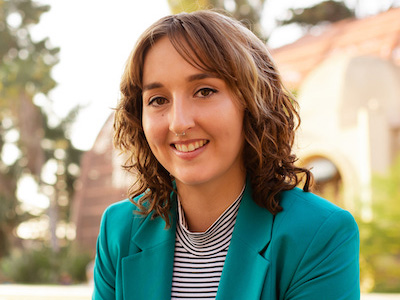
Bridget Rickman, one of our primatology conservation reserach interns, graduated in 2017 and began working with the San Diego Green Building Council as a Community & Programs Manager, facilitating various LEED and sustainable building programs over a four year period. In 2021, she began working at the California Energy Alliance as their Operations Manager, collaborating with various state-wide stakeholders in the development of sustainable energy policy and codes. In September of 2022, she will begin her Master's in the Anthropology of Global Futures & Sustainability at SOAS University of London, England. During her studies she will be addressing climate change through an anthropological lens with a specific focus on how we communicate globally about climate policy, environmental justice, public health, and building a collective sustainable future.
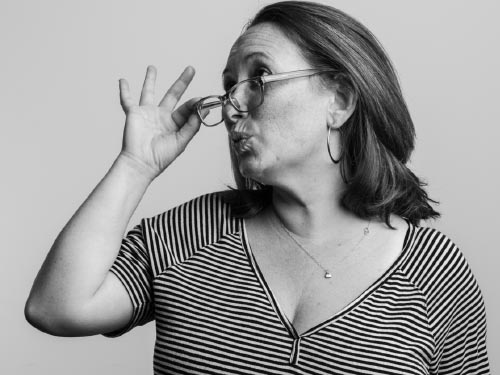
Molly Sirota
Molly Sirota currently leads a team of Game User Researchers at PlayStation’s San Diego design studio. Her team’s primary job is to research how gamers understand, interpret and interact with the world around them. Such information is then leveraged by video game designers to create innovative gaming experiences that stand out in a highly competitive market. Molly’s background in anthropology has provided her with the unique research skills needed to not only identify the core values driving a community towards or away from specific experiences, but to argue on behalf of the community when change is needed. Since graduating from SDSU’s Anthropology department in 2006, Molly has consulted in the educational, medical, automotive, financial and gaming world. But regardless of industry, the objective has always remained the same: identify the key needs of a community and work with companies, clients and teams to deliver on those needs.